
Running a Sex Offender Check in Nevada County
The Arkansas Sex Offender Notification System is the main public channel for Nevada County sex offender records. The Arkansas Crime Information Center manages the statewide data. The county sheriff's sex-offender page points users there rather than maintaining a second county database. That distinction matters because a search limited to the sheriff website will not produce the full public result list.
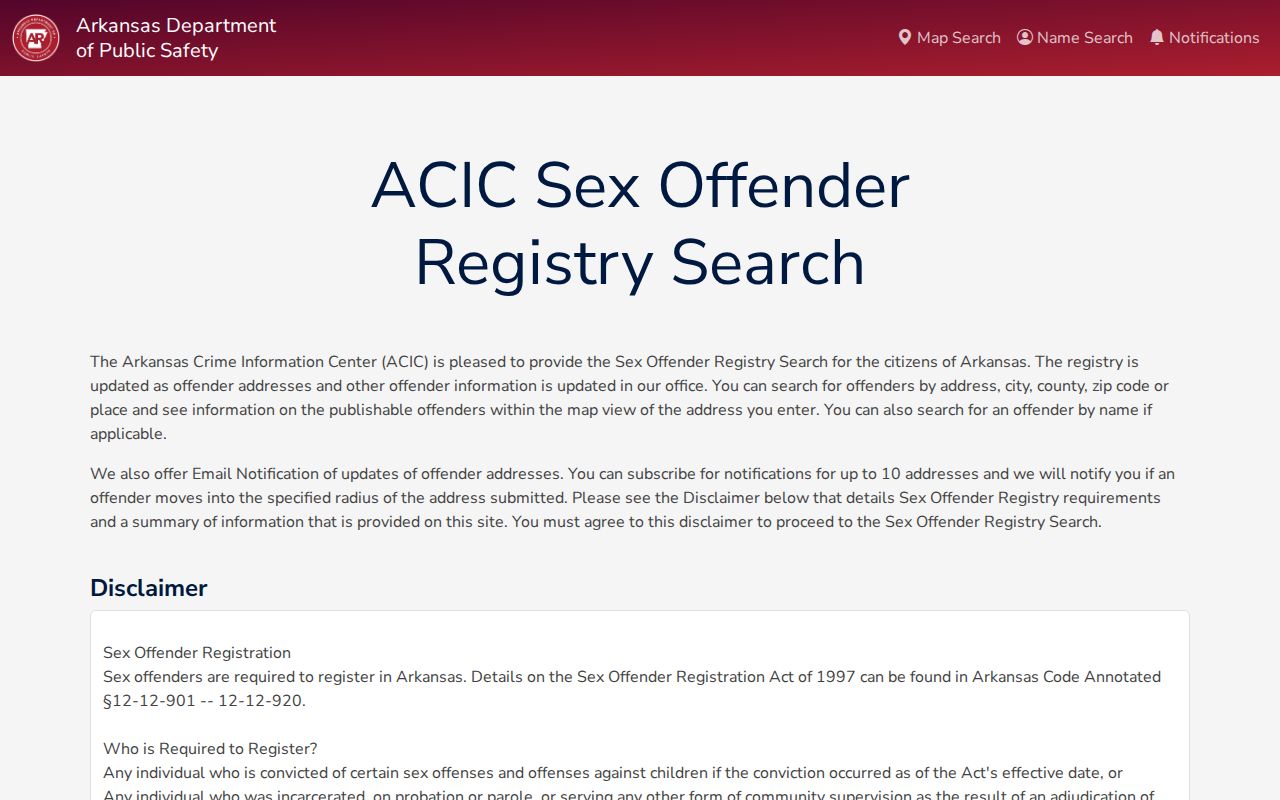
The official registry interface brings the state search fields and public profiles together. Begin with the clearest fact available. A full name helps distinguish people, while an address or map view helps with community awareness near a home, school route, or family gathering place. Results are public-safety notices, not court judgments or full criminal histories. Match more than one identifier before treating a profile as the correct person.
Nevada County Sheriff's Registry Route
The Nevada County Sheriff's Office provides the local connection to the state registry. Its public site includes a sex-offender route, and staff can handle questions about county registration rather than questions about how the ACIC search interface works. The office and detention facility are at 215 East 2nd Street South, Prescott, AR 71857. The main number is 870-887-2616.
A phone call is useful when the issue is local registration, a possible address change, or uncertainty about the right office. ACIC is the better contact for technical questions about the statewide portal. These channels serve different tasks. Neither a caller nor a web user should assume that an apparent omission proves a person has no registration duty.
The county route also matters when a search concern is tied to an address inside Nevada County. The sheriff can distinguish a local registration question from a portal problem and can direct the caller to the proper state contact. Statewide data remains in the ACIC system, so the county office should not be treated as a second online index with different profiles.
Searching the Arkansas Sex Offender Registry
The Arkansas system supports both identity and location searches. Use narrow details only when they are known, then review the result carefully. A broad map search may show relevant Nevada County profiles that a misspelled name would miss.
- Open the public Arkansas Sex Offender Notification System.
- Enter a first, middle, or last name, or use the address and map controls.
- Apply an assessment-level filter when it helps narrow the public results.
- Open the matching profile and compare its identifiers, address data, aliases, and status.
| Field | Control | Required | Use |
|---|---|---|---|
| First name | Text | No | Starts a name search. |
| Middle name | Text | No | Narrows similar names. |
| Last name | Text | No | Finds profiles by surname. |
| Address or map bounds | Map/address | No | Searches an area or location. |
| Assessment level | Filter | No | Limits results by public risk level. |
| Search | Action | Yes | Runs the selected query. |
Nevada County Sheriff App Access
The sheriff announced a new responsive website and free mobile app in September 2024. The office said the app gives access to sex-offender links along with inmates, most wanted entries, and press releases. That launch made registry routing easier for a user starting on a phone, though the public registry itself remains the statewide ACIC system.
Treat the app as an access point, not a separate set of county registry records. Follow its sex-offender link into the official state resource and use the same careful identity checks applied on a desktop search. For a local registration question, contact the sheriff directly.
What a Registry Profile Shows
A public profile can combine identity, location, physical-description, registration, and compliance fields. The available fields help a reader distinguish profiles, but no single field should carry the whole match. Addresses may use block-level street data, and images or other details can change as a record is updated.
| Identity | Registry web ID plus first, middle, and last name. |
|---|---|
| Assessment | Assessment level and its public description. |
| Images | A primary image and other image records when displayed. |
| Location | Address record, including a block-level street-number field. |
| Other identifiers | Aliases, driver or operator license data, employer data, scars, marks, and tattoos when public. |
| Registration record | Offense details and compliance or status information when displayed. |
Aliases, images, marks, and license records can help separate people who share a name. Employer and address fields should be read as reported registry details, not as an invitation to contact a workplace or household. Block-level location data also calls for care. It supports awareness while avoiding assumptions about every person at an address.
Profile data is a notification tool. If a location or status seems wrong, report the concern through the official channel rather than confronting anyone. The sheriff can route Nevada County registration concerns, while ACIC maintains the registry system.
Nevada County and NSOPW Results
The National Sex Offender Public Website provides a cross-state layer. It is useful when a person may have moved, when the location is near a state line, or when a name search should extend beyond Arkansas. The Arkansas portal remains the best starting point for the state's detailed public fields and map controls.
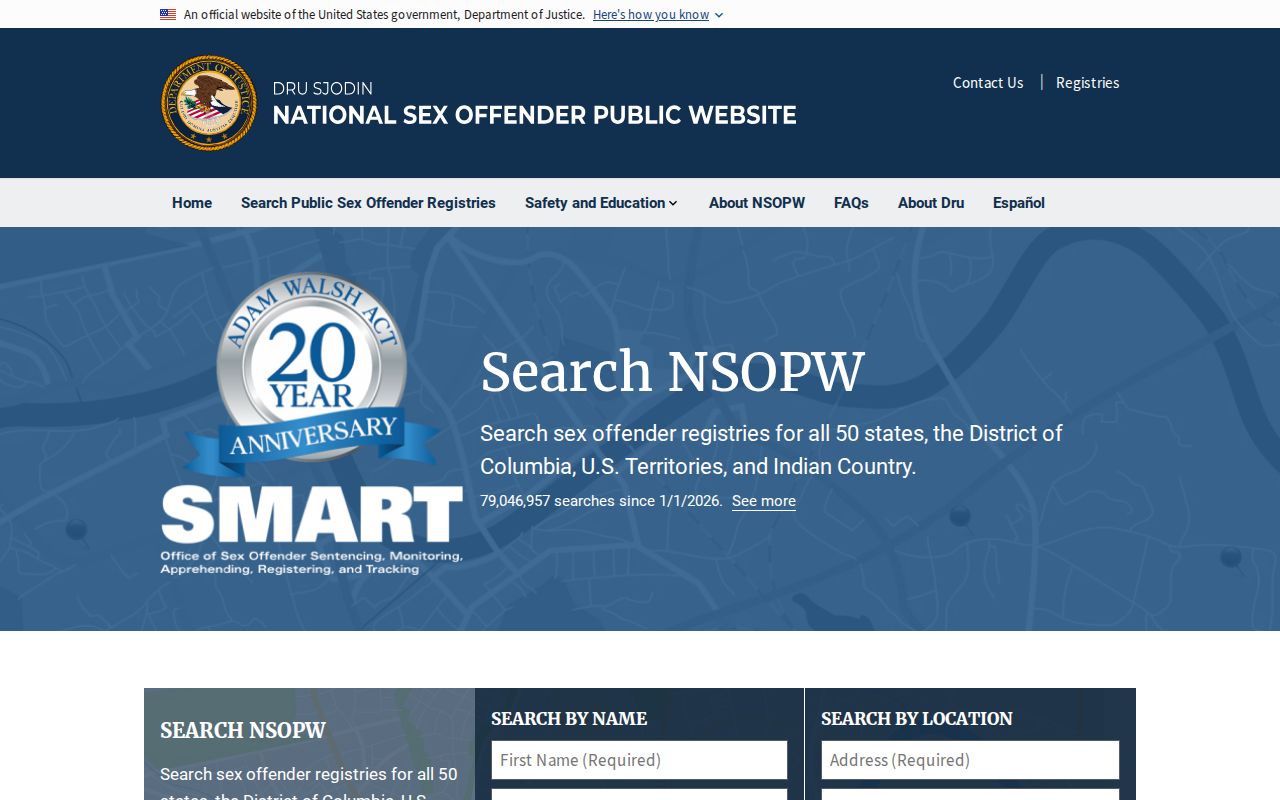
The national search broadens the geography, while the Arkansas system and Nevada County sheriff provide the state and local routes. Differences between results should prompt a careful check of names, locations, and the source profile. Search both systems with the same identity details when possible. A state profile may offer richer local fields, while the national layer can reveal an official record tied to another jurisdiction.
Registration Requirements and Levels in Arkansas
Arkansas uses assessment levels to describe risk and guide public notification. The research source does not provide a clean, current duration or verification-frequency schedule, so no term is invented here. Readers should use the live ACIC guidance for current duties and visibility rules.
| Level | Public meaning | Visibility note |
|---|---|---|
| Level 1 | Low risk or least likely to reoffend | Public visibility may be limited; verify current ACIC guidance. |
| Level 2 | Moderate risk | Public registry or community notification may apply. |
| Level 3 | High risk | Public notice and the profile are generally more prominent. |
| Level 4 | Sexually violent predator or highest risk category | Carries the highest public-notification concern. |
The assessment label concerns risk and notification. It is not a simple measure of how old an offense is, and it should not be converted into a claim that the public profile does not make. Current duties can depend on governing law and official assessment information. ACIC guidance is the proper source when a reader needs to understand what the displayed label means now.
An assessment level is not a substitute for reading the profile. It should be understood with the reported address, registration details, compliance status, and ACIC's current explanation.
Limited Level 1 Registry Information
A Level 1 designation does not mean that every detail will appear in the same way as a higher-level public profile. Arkansas public-notification practices can limit visibility for lower-risk records. A blank public search therefore is not proof that no registration record exists.
Use ACIC's current instructions when the level or visibility is unclear. For a Nevada County registration matter, ask the sheriff which official office can address the question. Do not use guesses, social media posts, or third-party people-search pages to fill a gap in the public registry.
Try both the name controls and the map or address controls before deciding that the portal has no matching public profile. Spelling, aliases, and location changes can affect a query. If the concern remains, give ACIC or the Nevada County sheriff the search details used and ask which official channel can confirm the registration question.
Reporting Nevada County Noncompliance
Possible noncompliance should go to law enforcement. Keep the report factual: note the profile, the location or status that appears inconsistent, and when the concern arose. The Nevada County Sheriff's Office is the county contact, while ACIC handles the statewide system. Emergencies go to 911.
Do not investigate through confrontation. A registry entry can lag a lawful update, and the public may not see every field held by an agency. Giving the sheriff clear, limited facts lets trained staff verify the registration record through channels unavailable to the public.
Save the registry web ID or other public reference information before calling. Explain whether the concern involves a reported address, compliance label, or another displayed field. This keeps the report tied to the official profile and reduces the risk of confusing people with similar names.
Lawful Use and Community Notification
Registry information supports personal safety and community awareness. It can help families plan, understand public notices, and identify the right agency for a concern. It does not authorize private punishment, threats, surveillance, or retaliation.
Use registry data lawfully: Do not harass, threaten, intimidate, or target a registrant or household. Misuse of public registry information may be a crime under Arkansas law.
Community awareness works best when readers stay with verified public facts. A profile can guide safety planning and an official report, but it does not prove conduct beyond what the registry states. Never extend a profile's facts to relatives, neighbors, coworkers, or other people who are not the listed registrant.
Verify a profile through the originating public system before relying on it. When facts conflict, contact the sheriff or ACIC and allow the responsible agency to resolve the record.